Showing posts with label 2018-03. Show all posts

Portugal - wild west coast


Boca do Inferno near Cascais


The windy west coast is not very habitable, but great to go for a visit. 
surf foam at Praia Adraga near Sintra


Pristine small sandy coves dotted all along the coast, with clear blue water, and deep blue sky - on sunny days, very inviting for easy strolls on the sand. 

Porto Covo


Porto Covo

Then there are cliffs further south, vertical walls that go straight down to the deep blue sea, fascinating sight. 

Cape St Vincent

Portugal - monuments


Sintra with castle on top


It is easy to learn history while traveling, like to find out that there is only one earthquake in the history of Portugal, and that it stayed neutral during the 2 world wars. This means historic monuments are in surprisingly good conditions. 

Sintra, Castle of the Moors

There are lots of huge castles with protective walls along hill tops in various locations, like this one in Sintra. 


Sintra, Castle of the Moors
A good 3km hike in the forest leads up to this castle at around 550km above sea level (can easily reached by bus/car too). 


Aqueduct at Evora

This is a 15th Century aqueduct at Evora that brings water from 13km away for use in this hill town. It is still in good condition, with houses built in the arches, ingenious!

Aqueduct at Evora

Aqueduct fountain at Evora

Portugal - Lisbon


Lisbon


In the last few years, Lisbon pops up as a favorite start up market in Europe. 

Lisbon river


The various reasons include warmer weather, first world facilities, a stylish safe environment, lower cost, and most importantly Portugal offers a great tax relief for new residents. 

Lisbon

Indeed after a few days in Lisbon, it is easy to understand the charm of the place. A capital with 7 hills, with districts in different levels all with different characters, reachable easily by subway, bus and trams, and small enough to walk around

Lisbon


There are lots of beautiful well maintained old buildings along the streets with lots of trees around. 

Lisbon

Hydrangeas


Hydrangeas after pruning


A job in early spring is to remove last year's dead flowers, I always do this when I can see where new buds are formed on the branch, and just prune above a bud. 

last summer hydrandeas

Early spring gardening


white cauliflower, green cauliflower cabbage, savoy cabbage seedlings

The most important job in early spring, and most interesting in my mind, is to start working on the vegetables to eat this year, and how to have them ready earlier in the season. 

propagators

This means to sow seeds in propagators to keep them in a warmer environment; to plant seedlings, bought from garden center, in raise beds for those veg that could stand cold weather. 

lettuce seedlings

parsley, mint, chive

White asparagus


White asparagus


Even though pretty cold this spring so far, very happy to see asparagus tips start to pop out from the soil. When covered, they stay white, very sweet and crunchy. Once exposed to sunlight, they turn green with chlorophyll and become less sweet, but may be more nutrients.

I like to simply bake them at 180˚C for 15 minutes to just remove the rawness, to enjoy their natural taste.

Wild garlic


Wild garlic

Early spring is the time to collect wild garlic leaves, growing in moist and shady area, these are picked from near a river. The picking last for 2 weeks, by the time flower stalk comes the leaves are a bit bitter.

Wild garlic

The leaves are more tender, shorter and wider than those of eating garlic. Most commonly they are chopped up, mixed with oil and salt to serve as a sauce, being raw, is a bit strong for me. 

wild garlic, grated ginger, olive oil, salt, pinch of sugar sauce

I prefer to stir-fry them until tender, to supplement the lack of dark green leaves in winter.

stir-fry wild garlic leaves

Italian friends said that they make wild garlic omelet.

Mackerel roll mop


Normally roll mop is made with herrings, which have a softer skin. I tried the method on mackerel and removed the skin first before salting.
Mackerel roll mop

1. Soak filet in 5% brine for 8 hours.
2. Bring to boil pickling solution with:
500gm cider vinegar
250 cider
12 all spice berries
12 black peppercorns
6 bay leaves
1 tbsp brown sugar
1 tsp mustard seed
zest of lemon

3. Remove liquid from salted filet, place in jars, roll up or in pieces, pour cooled down pickling solution.
4. Keep in the fridge, ready to eat after 3 days, and consume within a month.

Mackerel salted, frozen and semi-dried

mackerel salted and semi-dried


Just learned this method of semi-drying fish using the fruit drier, very effective to imitate the Japanese "one night dry" method of preserving fish, for a cured flavor and texture.

mackerel salted and semi-dried

Salted and semi-dried, the fish could be kept for a month in the fridge, but I keep them in the freezer instead for longer storage.


Some are simply salted in brine and frozen.  
mackerel salted then frozen

Brine
I used a 5% salt solution to soak the filet for 12 hours, the result is less salty than commercial ones which use at least 10% brine.

mackerel in 5% brine

Mackerel smoked


Mackerel smoked


Opened the fish from the back side to remove backbone, salted lightly for smoking the next day. 

Mackerel salted

Smoked over apple wood for an hour to dry first then hot cooked. 

Mackerel smoked

Mackerel mackerel


Mackerel


First time in my life to deal so many mackerels in one evening!

This is the time when mackerels migrate along the Atlantic coast from Spain up France, heading to North Sea for the year. 

Mackerel

Commercial and hobby fishermen are out catching them in just these few days, the rest of the year will be a lot harder. 

My fisherman came back with 2 boxes of mackerels, that is after giving away to friends. I practiced many ways to preserve them, so here is no need to buy fish this year.


Mackerel sashimi


Immediately have one on sashimi, good firm texture clean taste no smell at all, and one baked, very juicy. 

Mackerel baked


Stew cow cheeks


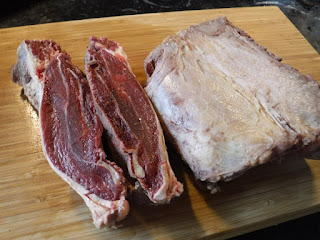
cow cheeks


I was given a few cow cheeks from the cow farmer neighbour, these are big pieces of meat with a lot of tough tissues inside.
Decided to cook them using the Hong Kong style beef brisket spices.
Stew cow cheeks

1. Cut cheeks into half inch thick pieces, place in a wide pot and cover with water.
2. Add bay leaves, star anise, cinnamon stick, ginger, garlic, old mandarin peel, Sichuan pepper, whole white pepper, one inch piece of rock sugar and a tsp salt. 
Stew cow cheeks

3. Bring to boil, add liqueur to clarify the foam formed.
4. Simmer for 4 hours until meat is tender, take the meat out, and reduce the liquid to form a sauce, adjust seasoning with soy sauce and sugar. 
5. Put the meat back into the thickened sauce to warm up before serving.

Cauliflower cumin cheese


A quick hearty meal on it's own, and full of flavor.
 
Cauliflower cumin cheese

1. Cut cauliflower into florets, shake in a big bowl with olive oil and cumin seeds.

Cauliflower cumin cheese before baking
 
2. Place on baking tray and grate a hard cheese like Comte, Gruyere or Cheddar on top.
3. Bake at 170˚C until light golden, around 30 minutes.

Grafting fruit trees


Grafting fruit trees


This is a useful skill to learn as fruit trees are expensive. The first job is to plant young vigorous wild fruit trees (they are cheap) that are the correct root stocks for grafting the desired fruit varieties. 

young wild fruit trees

In late autumn, cut some soft branches with buds from well developed fruit trees, wrap up in paper and keep in the fridge over winter. 
soft fruit branches with buds

In spring, when the wild fruit trees are big enough, cut the top part off, make a vertical slit, make a tapering cut on both side of the fruit branch, place cut tip of the branch into the slit so that the outside of the branch lines up with the root stock. 

cut a slit on wild fruit tree
insert tapered cut ends of fruit branch into root stock

If the root stock is big, place 2 branches in to see which one takes. Cover all exposed cuts with tree glue, then wrap up well with cling film so that the joint is tight and there will be no loss of moisture.
cover cuts with tree glue
wrap joint with cling film

When buds on the branch grow, it is a successful graft.