Showing posts with label 2019-02. Show all posts

Daikon black bean pickle


This winter I have been eating a lot of daikon pickles, need to change the recipe regularly to add interest to the dish. This time I add fermented black bean which gives a special fragrance and flavor. 

Daikon black bean pickle

Cut daikon into bite size pieces, season with salt, fermented black bean, brown sugar, chili and white pepper, mix well. Leave for a night, mix regularly, juice will come out.

Serve as such as a snack, or make daikon black bean pickle with mango dish. The soft texture and sweet sour flavor of mango goes well with crunchy savory daikon.

 
Daikon black bean pickle with mango and herbs
Simply cut mango into similar bite size pieces, chop fresh herbs finely (coriander, parsley, basil etc), mix with equal amount of daikon pickle and it is ready.

Cherry tomatoes in 2 dishes


home grown cherry tomatoes

Given a big box of homegrown cherry tomatoes, they are small but bursting with sweet and acidic flavor. 

Dish one - cherry tomatoes with Kinzanji miso and mint
cherry tomatoes with Kinzanji miso and mint


Cut tomatoes into halves, mix with Kinzanji miso and mint. The savory sweet umami flavor of miso goes really well with the sharp tasting tomatoes.

Dish two - cherry tomato scramble egg and mint

cherry tomato scramble egg and mint

A popular dish in my childhood, rarely make it now as I normally have egg in the morning. However thought of making this dish again because of these tasty tomatoes.
Season eggs with salt, cook and before totally set, add tomatoes, cut into halves. Stir to mix and cook just enough to warm the tomatoes, add mint before serving.

Steak with Vietnam coriander sauce


Vietnam coriander
 
Got a box of super fresh home grown Vietnam coriander, a herb with powerful characteristic perfume. Thought of having it with steak, sort of like replacing tarragon in Bearnaise sauce.

Steak with Vietnam coriander sauce

1. Sear steak in a hot pan for a brown look on both sides, rest in 80˚C oven.
2. Sweat onion, deglace with wine, add 1/2 cup water, season with soy sauce, black pepper and brown sugar, simmer until onion soft.
searing steak with onion
 
3. Remove from heat and stir in Vietnam coriander leaves, just to warm the leaves to soften and reduce the powerful perfume, serve on top of steak.

Chilean Loco meat seared and steamed

 
Got photo of an interesting dish from friend, of baked abalone with ginger and coriander, sounded tasty and looked great. However most of the abalones sold in local market are farmed. One day I saw in the frozen food part of a supermarket Loco meat from Chile, I remembered eating it there and tasted like abalone.

Chilean Loco meat defrosted

Reading on the net, Loco meat is actually a type of Chilean snail, but is very similar to abalone in terms of look, taste and texture. So I can experiment with the recipe, 2 baked and 2 seared. 

Chilean Loco meat after washing with salt

1. Rub defrosted loco meat with salt twice to remove the slime and black marks.


Seared Loco meat

Chilean Loco meat seared with ginger

2. Warm pan with oil and ginger, at high heat add Loco meat flat side down, a lot of liquid will come out, add half a cup of rice wine, lower to medium heat and put lid on. 
3. Cook for 4 minutes, liquid will gradually dry off.

Crunchy texture like abalone, goes well with tasty reduced jus.


Baked Loco meat

Chilean Loco meat before baking
Chilean Loco meat wrapped up

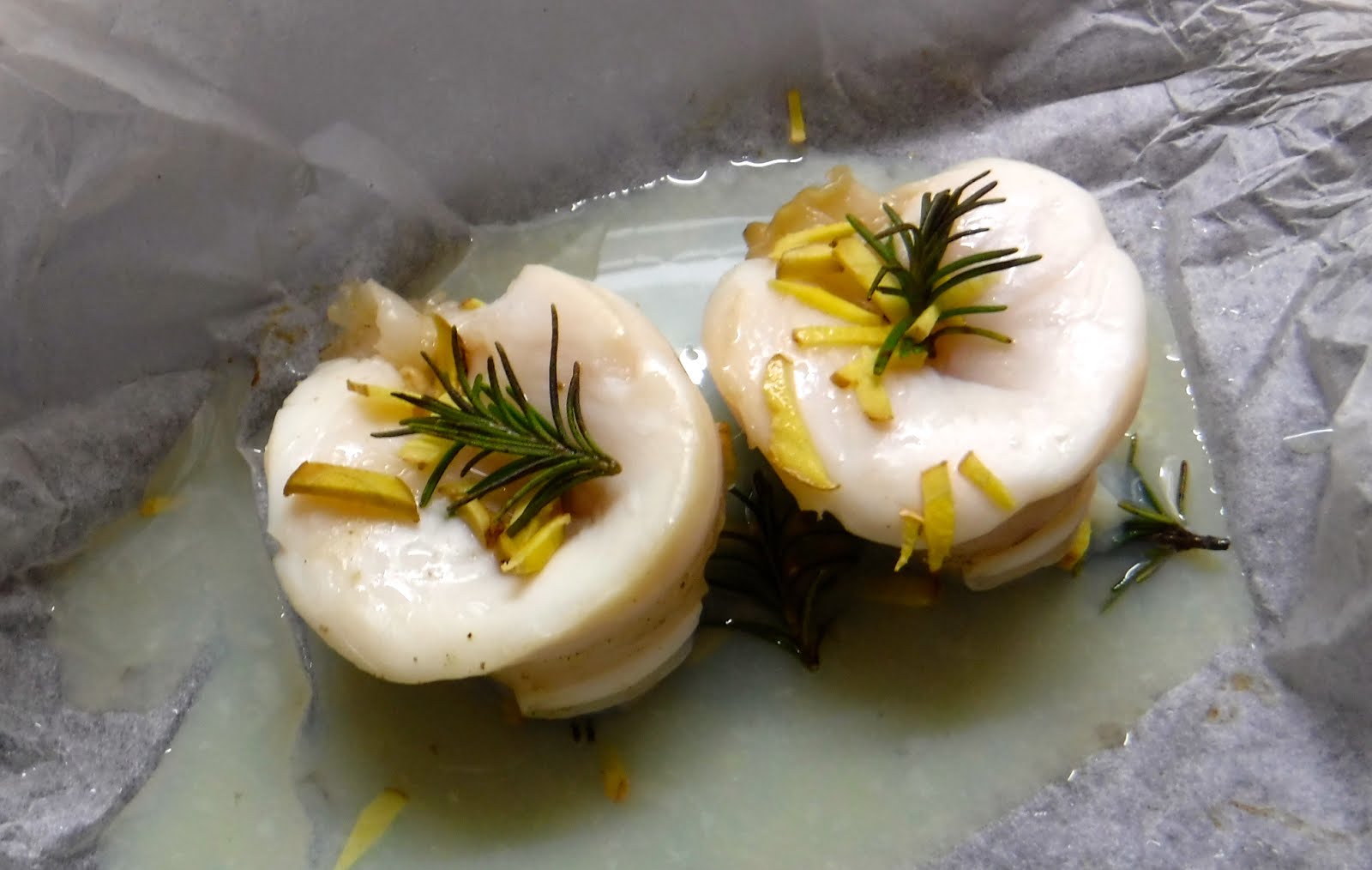
4. Place Local meat on baking paper, add a tbsp rice wine, ginger, rosemary (or coriander), wrap up and bake at 200˚C for 10 minutes, rest with oven door ajar for 5 minutes.

Chilean Loco meat after baking

Same crunchy texture, but a lot of liquid came out and not very presentable, but the fragrant of rosemary indeed went into the meat.

Kimchi pork rib stew


Kimchi pork rib stew


1. Cover pork ribs with water, add slices of ginger, rice wine (1 star anise, old mandarin peel, Asian licorice etc), bring to boil and simmer for 15 minutes. Leave with lid on.
2. At meal time, bring the ribs back to boil, add kimchi, season with salt, add coriander just before serving.

Homemade not spicy Kimchi


Homemade Kimchi

In order to eat more fermented food regularly, I turned cabbage into kimchi. Making kimchi at home is easy, and can control how chili hot or salty we like. In my case I don't like it too hot and salty, so I reduced salt and used smoked sweet pimenton for the colour.
This kimchi can be eaten on its own, or cooked with meat for a deep flavored dish. 

 
organic cabbage from SOIL farm
1. Wash and dry cabbage, cut into inch long pieces, add slices of onion or garlic or daikon etc. as you wish, mix with 2% its weight of salt, leave for half a day to soften, liquid will come out.
2. Cook a tablespoon of rice flour in 1 cup of water until boiled and thicken, season with 2% salt, chili/pimenton as you like. 
 
Homemade Kimchi sauce

3. When sauce cooled down, pour into cabbage mixture and store in a jar with a loose lid, the liquid should cover all the veg, cover with cloth and leave at room temperature to ferment. 
4. Press down cabbage everyday and taste the sourness. When it reaches the sourness you like, a few days for me, keep in the fridge. As this kimchi is not heavily salted, it should be used within couple of weeks. 


Braised Mayau fish with mushroom


During CNY, I soaked dry mushrooms for cooking traditional dishes, while there are some left over, I thought of using it with Mayau fish steak, kept in the freezer. Amazingly this fish really goes well with all types of cooking, even with such a rich flavored dark sauce, the fish is still delicious.

 Braised Mayau fish with mushroom

1. Sear skin sides of Mayau fish steak until light golden, place cut up soaked mushroom around, season with soy sauce, rice wine, mushroom soaking water, brown sugar and white pepper.
2. Simmer gently until fished cooked, around 10 minutes and sauce reduced.

Lamb steak in curry coriander sauce


I like to use curry powder to make a fragrant light sauce, to serve with simply seared steak, so easy to make and so colourful. 

Lamb steak in curry coriander sauce

1. Season lamb steak with salt and white pepper. Sear both sides light golden and middle rare, remove from pan.
2. When the pan is cooled a little, add 3 tablespoons of yogurt, season with curry powder, turmeric powder, lemon juice, salt and brown sugar.
3. Bring to boil, then remove from heat, add lamb steak to warm up, mix in coriander before serving.  

Chinese new year meal


Served a big meal with the family, a lot of vegetable dishes, wild fish, good quality meat, and a number of bottles of red wines. It is great to have people around who love food and can eat.

First a few cold starters to go with long boiled pork bones, soy bean and carrot soup:

Fresh pickled Giant Kailan stalk
Blanched daikon noodle with Kinzanji miso
Tongho lettuce with pomelo salad

Seared wild black snapper:
wild black snapper 牛屎鱲

1. This 3 catty fish is big to be cooked whole on barbecue, so filet it into two halves, one with back bone, for 2 meals. Seasoned with salt for half a day.  

wild black snapper 牛屎鱲

2. Sear skin side down on medium heat for 7 minutes, turn over the bone side down, pour half a cup of rice wine, cover with lid and cook for 7 minutes, rest for another 5 minutes. 

wild black snapper 牛屎鱲

3. Make a sauce, sweat spring onion until soft, add half cup of water, half cup of rice wine, season with soy sauce and brown sugar, bring to boil and reduce to half.
Serve around the fish.

Roast chicken:

roast chicken with spring onion ginger olive oil sauce

1. Rub salt and white pepper all over the chicken and under the skin, place on a rack and dry in the fridge for a day.
2. Cut into front and back halves, roast skin sides up on the upper rack, at 180˚C until cooked, skin should be crispy, around 30 minutes depending on size.
3. Serve with spring onion and ginger olive oil sauce: cut the green part of spring onion into fine pieces, grate ginger, mix with olive oil and season with salt.

Roast pork:
roast pork

1. Prepare a cup of seasoning by mixing miso, soy sauce, brown sugar, 5 spices powder and rice wine, into a medium thick paste.
2. Place an inch thick of pork shoulder or pork neck meat in the seasoning for 2 hours.
3. Scrape off seasoning and sear over medium heat with lid on until cooked, about 8 minutes each side.
4. Bring to boil the remaining seasoning, pour on top of sliced pork.

Followed by cooked vegetable dishes of cabbage and winter mushroom.
stir-fry cabbage

Winter mushroom, daikon cured meat stew


Finally end with black sesame glutinous rice dumpling in fermented rice sauce and goji berry as dessert. 

black sesame glutinous rice dumpling


black sesame glutinous rice dumpling in fermented rice sauce and goji berry


Tongho 茼蒿 sweet corn salad


This year I really like to eat Tongho raw, for the crispy texture and mild but unique fragrance. This time I use it a bit like a local Shanghainese vegetable 馬蘭頭, to make a savory cold dish with cut up ingredients. 

Tongho 茼蒿 sweet corn salad


Cut Tongho into rough or fine shreds as you wish, mix with sweet corn or firm beancurd etc, season with soysauce, sesame oil and brown sugar.   

Pickle daikon with miso and sour plum


Pickle daikon with miso and sour plum

While daikon is at their best now, it is great to make pickle to have it ready for snack or side dish.

Pickle daikon with miso and sour plum

1. Cut daikon into chunks, season with dark miso, brown sugar and  a salty sour plum, mix well regularly, juice will come out.
2. After half a day, pack daikon and juice into a jar to keep in the fridge to prolong the enjoyment.

Vegetable farm visit in Hong Kong, Soil Farm 鄉土學社


I have been ordering a weekly delivery of locally grown vegetables through a group formed by Soil Farm, they set up groups in different districts in Hong Kong. Order is placed on Thursday and vegetable delivered to a shop in the area on Friday for pick up. The farm only sells direct to customer.


Soil Farm Hong Kong, tomato and kailan


Yesterday they arranged an open day to explain how the vegetables are grown. The two young men know well Permaculture principles. They make their own compost from food waste collected from shops near by, also bring in used mushroom growing culture, to feed the soil for growing healthy tasty vegetables. 

Soil Farm Hong Kong


There are a few things that impressed me. The first is that vegetables are grown among a mixture of short weeds that act as mulch to reduce moisture lost, looks so natural.

Soil Farm Hong Kong, lettuce


After initial preparation of soil, they do not turn the soil anymore, just add compost on top before next sowing or planting, let the microbes do the job. The soil is rich, soft and black, much better then my garden soil, there is work to do.

Soil Farm Hong Kong, strawberry plants


They learned from experience that if the plants are well nourished, there will be less disease and pests attack. They add a1/2 cm thick layer of compost before planting, during growth and when there is sign of disease or attack.


Soil Farm Hong Kong, used mushroom growing culture


An interesting point is that they are growing salads in boxes this year to increase yield. Even though using the same soil, same seeds, the taste of those grown in the box is milder than those from the land. This shows that vegetables growing naturally in the ground can access a lot more micro-nutrients than those in a restricted box, or possibly in aquaculture method. 

Soil Farm Hong Kong, food waste compost


The farm is not certified organic, because the rule is, they said, if certified, they cannot use home made compost to feed the soil. Instead have to use the recommended fertilizers like composted chicken shit and pressed peanut, both are generally purchased from Holland. This will restrict their use of Permaculture principles in growing vegetables, and in helping to reduce local food waste and cut down transport of materials.

Turnip cake 蘿蔔糕


Turnip cake 蘿蔔糕


A savory steamed cake to have over Chinese new year. After a couple of trials, this recipe gives a good result.


1kg big turnip shredded (use julienne peeler to shred into very thin strips)

220gm rice flour

220gm water

2 Chinese sausage, cut into small cubes

5 dry mushrooms, soaked and cut into small cubes

small handful of dry shrimps

1 shallot, cut into small pieces

a few slices of ginger,

salt, sugar, white pepper

Turnip cake 蘿蔔糕 ingredients


1. Stir fry Chinese sausage until oil comes out, remove from pan.

2. Use the oil to stir fry shrimps to refresh, add mushrooms, cook until the water in mushrooms is gone, remove.

3. In the same pan, add ginger slices, sweat shallot until soft, add shredded turnip and seasonings, stir to mix and cook at medium heat with the lid on until turnip becomes transparent, around 20 minutes, remove ginger.

4. Have ready rice flour mixed with water mixture, pour in hot turnip and all liquid. Fold gently, use the heat of the turnip to cook rice mixture to form a paste, mix in other ingredients.

5. Pour into an oiled dish, steam for 45 minutes.

Kinzanji miso dishes


I like the flavor and texture of this whole grains (soy, rice, barley) miso so much that I used it in seasoning various dishes. The savory sweet umami flavor of the miso goes well with most ingredients.

Kinzanji miso with pork ribs

Miso with pork ribs - season pork ribs with miso, rice wine and a little oil, steam until cooked, around 12 minutes.

Kinzannji miso with Mayau fish

Miso with Mayau fish - the defrosted Mayau fish has a mild fishy smell, adding miso and rice wine help to remove this. Wrap in baking paper and bake at 180˚ until cooked, around 20 minutes

Miso with cherry tomatoes - cut firm cherry tomatoes into halves, mix with miso, a refreshing simple side dish.